Best climbing shoes for beginners
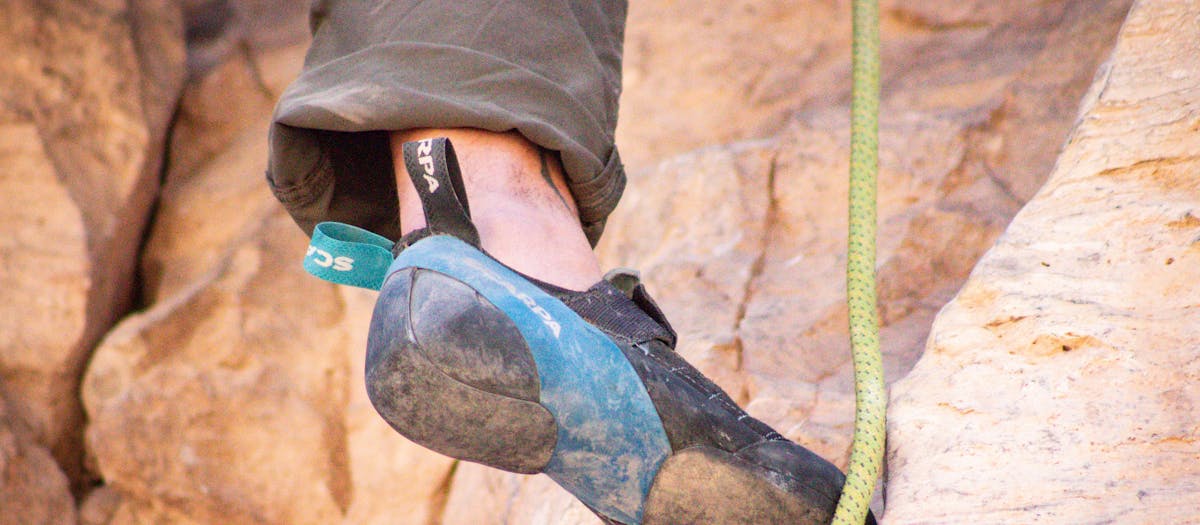
Your first pair of climbing shoes should do one job: help you learn good footwork without hurting your feet. That points to a forgiving, neutral shoe — not the aggressive, claw-shaped performance shoe you see in videos of people climbing steep overhangs. This guide explains the specs that separate a good first shoe from the wrong one, so you can pick a pair that fits your foot and your stage, then points you to the picks once they are verified.
A note on how to read this. There is no single best beginner shoe, because the best shoe is the one that fits your foot. So the value here is in the buying framework — last shape, downturn, stiffness, closure and rubber — applied to a short list of widely available shoes. Read the framework first, decide what your foot needs, then look at the picks that match.
How to choose a beginner climbing shoe
Five specs decide whether a shoe suits a beginner. Run any shoe you are considering through these before you look at the price.
Last shape — neutral, not aggressive
The last is the shape the shoe is built around. A neutral last is flat and keeps your foot in a relaxed, natural position. An aggressive last curves the toe down and the heel up to load power onto the big toe for steep climbing. Beginners want neutral. The flat shape is more comfortable for the long sessions beginners climb, and it does not mask the footwork you are trying to learn.
Downturn — flat is your friend
Downturn is the downward curve at the toe. A downturned shoe excels at pulling in on overhanging holds and is genuinely uncomfortable everywhere else. For the gentler angles beginners climb most, downturn is a drawback, not a feature. A flat shoe spreads pressure across your whole foot instead of jamming it into the toe.
Stiffness — soft to moderate
A stiffer shoe supports your foot and lets you stand on small footholds without your foot muscles doing all the work — useful while those muscles are still developing. A softer shoe gives you more feel of the wall but demands more from your feet. A soft-to-moderate stiffness is the beginner sweet spot: enough support to be comfortable, enough feel to learn.
Closure — Velcro, laces, or slipper
Velcro straps are quick on and off and adjust enough for most feet, which is why they are the common beginner pick. Laces fine-tune the fit across the whole foot but take longer to adjust between climbs. Slippers (elastic, no closure) are the simplest but offer the least adjustment. None is wrong; Velcro is just the lowest-friction choice when you are taking shoes on and off all session.
Rubber and fit
Beginner shoes use a slightly thicker, more durable rubber, which lasts longer through the foot-dragging that comes with early footwork. The exact rubber compound matters far less than fit. Aim for snug with your toes touching the end and no painful pressure points. A shoe you dread putting on is a shoe you will not wear, and the best shoe is the one you actually climb in.
The shoes compared
A short list of widely available beginner shoes, compared on the five specs above. Specs are verified against manufacturer listings and current Amazon product pages — no hands-on testing claims, just the numbers that decide the fit.
| Best for | Last shape | Downturn | Closure | Rubber | Sizing note |
|---|---|---|---|---|---|
| Best overall beginner shoe | Neutral / flat | None (flat) | Quick-pull lace | FriXion RS rubber | Widely reported to run small — most climbers size up |
| Best for all-day comfort | Neutral / flat | None (flat) | Two hook-and-loop (Velcro) straps | 4.3 mm rubber outsole | Comfort-oriented fit; runs close to true to size |
| Best budget under $80 | Neutral / flat | None (flat) | Lace-up | Science Friction rubber | — |
| Best for wide feet | Neutral / flat | None (flat) | Two hook-and-loop (Velcro) straps | Vibram rubber | Roomy, comfort-oriented fit — suits wider feet |
| Best step-up (second pair) | Neutral / flat | None to mild | Lace-up | Vibram XS Edge rubber | — |
Our top picks
Best overall beginner shoe: La Sportiva Men's Tarantulace Rock Climbing Shoes

Best overall beginner shoe
La Sportiva Men's Tarantulace Rock Climbing Shoes
La Sportiva
- Last shape: Neutral / flat
- Closure: Quick-pull lace
- Downturn: None (flat)
- Upper material: Leather / synthetic
- Rubber: FriXion RS rubber
- Sizing note: Widely reported to run small — most climbers size up
A flat-lasted, lace-up all-rounder — the classic comfortable first shoe for gym and rock.
Last checked 2026-05-20
Best for all-day comfort: Black Diamond Men's Momentum Rock Climbing Shoes

Best for all-day comfort
Black Diamond Men's Momentum Rock Climbing Shoes
Black Diamond
- Last shape: Neutral / flat
- Closure: Two hook-and-loop (Velcro) straps
- Downturn: None (flat)
- Upper material: Engineered knit
- Rubber: 4.3 mm rubber outsole
- Sizing note: Comfort-oriented fit; runs close to true to size
Breathable knit upper and soft flex midsole built for long gym sessions where comfort matters most.
Last checked 2026-05-20
Best budget under $80: Mad Rock Drifter Climbing Shoe

Best budget under $80
Mad Rock Drifter Climbing Shoe
Mad Rock
- Last shape: Neutral / flat
- Closure: Lace-up
- Downturn: None (flat)
- Upper material: Synthetic
- Rubber: Science Friction rubber
- Sizing note: —
A flat, lace-up beginner shoe and one of the lower-priced name-brand options for a first pair.
Last checked 2026-05-20
Best for wide feet: SCARPA Men's Origin Rock Climbing Shoes

Best for wide feet
SCARPA Men's Origin Rock Climbing Shoes
SCARPA
- Last shape: Neutral / flat
- Closure: Two hook-and-loop (Velcro) straps
- Downturn: None (flat)
- Upper material: Suede leather / microfibre
- Rubber: Vibram rubber
- Sizing note: Roomy, comfort-oriented fit — suits wider feet
A relaxed, flat-lasted gym-and-sport shoe with a generous toe box that accommodates wider feet.
Last checked 2026-05-20
Best step-up (second pair): SCARPA Men's Helix Lace Rock Climbing Shoes

Best step-up (second pair)
SCARPA Men's Helix Lace Rock Climbing Shoes
SCARPA
- Last shape: Neutral / flat
- Closure: Lace-up
- Downturn: None to mild
- Upper material: Suede leather
- Rubber: Vibram XS Edge rubber
- Sizing note: —
A flat, lace-up suede shoe that adds edging precision over a first pair without going aggressive — a natural second shoe.
Last checked 2026-05-20
Who should buy what
Brand-new and climbing at a gym
A flat, Velcro, soft-to-moderate shoe is all you need, and the cheaper end of the beginner range is genuinely fine. You will improve your footwork faster in a comfortable shoe than in a stiff, tight one you avoid wearing. Do not buy aggressive shoes because a stronger climber recommended them — that is the right shoe for their climbing, not your stage.
A few months in and climbing more often
If your feet have toughened up and you are climbing two or three times a week, you can size a little snugger and consider a slightly stiffer or lace-up shoe for a more precise fit. Still keep the last neutral. The jump to a downturned shoe is a later decision tied to climbing steep terrain, not a beginner upgrade.
Wide or narrow feet
Fit trumps every other spec. Some brands run wide, some narrow, and a shoe that scores perfectly on paper is the wrong shoe if it does not match your foot. Try shoes on where you can, follow the specific brand size chart, and prioritise a comfortable last over a famous model. A dedicated wide-feet guide is on the way in a later batch.
After the shoes: the rest of your first kit
Shoes are the first buy, not the only one. Chalk and a chalk bag come next, and a brush soon after — all covered in the gear hub. And once you start climbing outdoors, you will need a crash pad to land on. It is the natural next purchase after your first kit, so it is worth knowing how to choose one before you are standing under a boulder wondering: see the best bouldering crash pad guide for the foam, coverage and fold specs that keep a landing safe.
Frequently asked questions
What kind of climbing shoe should a beginner buy?
A neutral, flat-shaped shoe with a comfortable fit. Look for a relatively flat last (no aggressive downturn), a soft-to-moderate stiffness, and a closure you find easy to use. Neutral shoes support your foot while you build technique. Aggressive downturned shoes are made for steep, hard climbing and are the wrong first pair.
How tight should beginner climbing shoes be?
Snug, with your toes touching the end but not painfully curled. A beginner shoe should be comfortable enough to wear for a whole session, since you are climbing for hours, not single hard moves. A shoe so tight you take it off between climbs is sized wrong. Tight-for-performance fitting comes much later, if at all.
Should my first climbing shoes have Velcro or laces?
Velcro (hook-and-loop) straps are the easiest for beginners — quick on and off between climbs, with enough adjustment for most feet. Laces give a more precise fit across the whole foot but take longer. Slip-on (slipper) shoes are simplest but offer the least adjustment. For a first pair, Velcro is the common, low-friction choice.
What does "downturn" mean on a climbing shoe?
Downturn is how much the shoe curves downward at the toe, like a curled claw. Aggressive downturn helps pull on steep, overhanging holds but is uncomfortable and unnecessary for beginners. A flat or neutral shoe keeps your foot in a natural position, which is better for learning footwork and for the gentler-angle climbing beginners do most.
Do I need to size climbing shoes down from my street size?
Sometimes, but not always, and not as aggressively as forums suggest. Climbing-shoe sizing varies a lot between brands, so the right approach is to try them on or follow the specific brand size chart rather than a blanket rule. Aim for snug with no painful pressure points. Downsizing for performance is a habit experienced climbers debate; beginners should prioritise comfort.
How long do beginner climbing shoes last?
For a beginner climbing two to three times a week, a first pair typically lasts several months to a year before the toe rubber wears thin. Footwork improves with time, and sloppy early footwork wears shoes faster. Many shoes can be resoled once the rubber thins, which is cheaper than replacing them.
Can I wear socks with climbing shoes?
You can, and many beginners prefer to at first for comfort and hygiene, especially in rental shoes. Thin socks change the fit slightly, so account for that when sizing. As you progress you may go sockless for more feel of the wall, but there is no rule requiring it. Comfort that keeps you climbing wins.
How much should I spend on my first climbing shoes?
A good beginner shoe runs roughly $80 to $130. Spending more usually buys a more aggressive, specialised shoe, which is the wrong direction for a first pair. Spend on fit, not on price. If your gym rents shoes, a few rental sessions can also help you learn what fit you like before you buy.