Bouldering gear
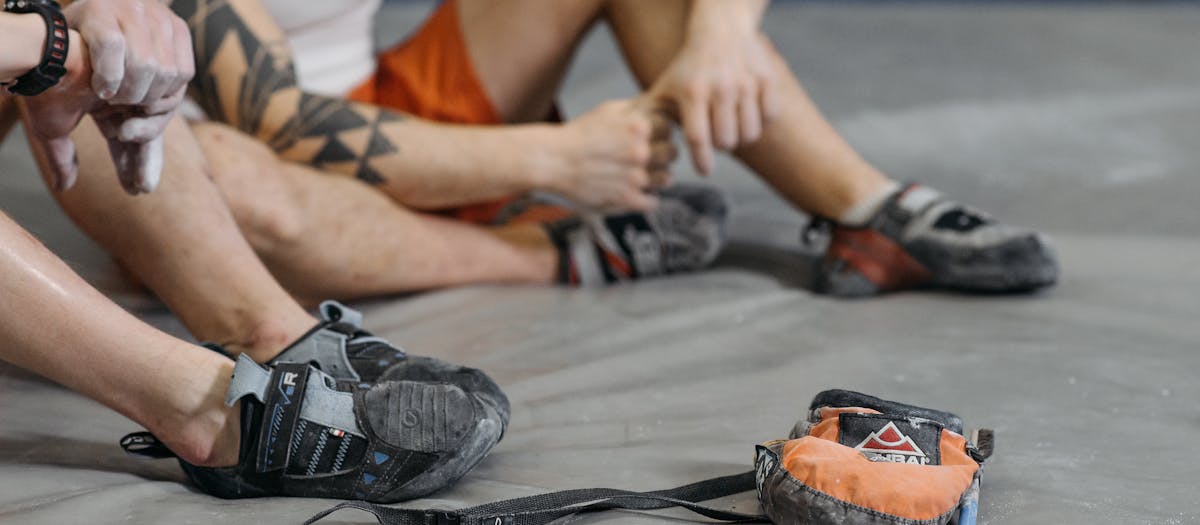
The good news about bouldering gear: there is very little of it. You can walk into a gym, rent shoes, borrow chalk, and climb your first session for the price of a day pass. This silo is the first-kit cluster — shoes, chalk, chalk bags and brushes — laid out in the order that actually matters, so you spend on the right thing first and skip the rest until you need it.
Most beginner gear advice online is either a brand-sponsored list or a forum thread arguing about a single shoe. The aim here is different: explain what each piece of gear does, what specs separate a good one from a poor one, and what you can safely put off. No grade-flexing, no gear you do not need yet.
What to buy first (and what can wait)
If you only read one section, read this. Spend in this order.
- Shoes — buy first. The one piece of gear that changes how you climb. A forgiving first pair is worth getting right.
- Chalk — buy with the shoes. Cheap, simple, keeps your hands dry enough to hold the wall.
- Chalk bag — buy soon. Holds your chalk between climbs. Any well-made bag works.
- Brush — buy soon. Cleans chalk and skin oil off slick holds. Cheap and good etiquette.
- Everything else — wait. No crash pad until you climb outdoors, no finger-training gear in your first six months, no climbing-specific clothes. Stretchy clothes you already own are fine.
Featured guides
The current published guides in this silo. More land each batch.
Landing next: Best chalk for climbing, Best climbing chalk bag, Climbing shoes for wide feet, and Climbing tape and how to use it.
What matters in your first kit
The buyer-education layer the listicles skip. Run these notes against any listing before you add it to a cart.
Shoes — fit and shape before brand
A beginner shoe should have a relatively flat profile (a neutral last) rather than the downturned, claw-like shape of an aggressive performance shoe. Downturn helps on steep, hard problems and hurts everywhere else, so it is the wrong feature for a first pair. Fit should be snug with no painful pressure points — your toes touch the end but are not curled in agony. A shoe you dread putting on is a shoe you will not wear. The shoes guide breaks down last shape, downturn, closure and rubber in detail.
Chalk — type and form, not the label
Climbing chalk is magnesium carbonate; it dries the sweat off your hands so your skin grips. It comes loose, as blocks you crush yourself, or sealed inside a chalk ball (a refillable mesh sack that releases chalk with far less mess). Some gyms require chalk balls to keep dust down, so check the rules where you climb. Liquid chalk — an alcohol-based base coat — is useful for sweaty hands and dusty gyms, but you do not need it to start.
Chalk bag — fit to your hand and how you climb
A chalk bag holds your chalk and clips behind you or sits on the floor. For bouldering, many climbers use a wider chalk bucket they leave on the ground between attempts rather than a waist bag. Either works. Look for a stiff rim that stays open, a closure that keeps chalk in when it tips, and a fleece lining that holds chalk well.
Brush — bristle type and reaching the hold
Boar's hair is the classic bristle — firm enough to clear chalk without polishing the hold smooth. Avoid steel-bristle brushes, which damage both plastic gym holds and rock. A brush on a stick (or a telescoping handle) lets you clean holds you cannot reach, which matters on taller problems.
What you do not need yet
A crash pad — only for outdoor climbing
Indoor gyms have thick, fitted floor padding, so a personal crash pad does nothing for you there. A pad is for outdoor bouldering, where you carry it in and lay it under the problem. Buy one when you start climbing outside, not before. The crash-pads silo covers how to choose one when that day comes.
A hangboard or finger trainer — not in your first months
Finger-training gear is genuinely useful later and genuinely risky early. Your tendons and pulleys strengthen more slowly than your muscles, so loading them on a hangboard in the first 6 to 12 months is a common way beginners get hurt. Climbing is the training you need at the start. The training silo explains the timeline before any product.
Premium everything
A $200 shoe does not make a beginner climb better than an $90 shoe — it just fits a more specific style of climbing. Spend on a shoe that fits and a chalk setup you will use, and put the rest toward gym visits, where the real progress happens.