Best climbing holds for a home wall
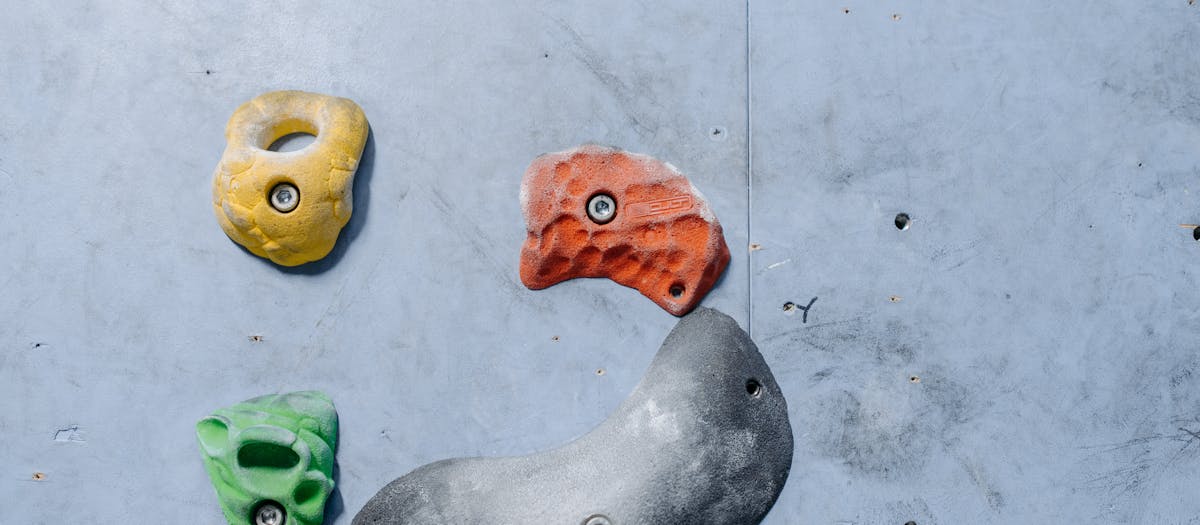
Holds are the part of a home wall that decides whether you actually want to climb on it. Buy the wrong mix and the wall feels flat and unfair; buy a good mix and you can set fresh problems for years. This guide explains what to compare — set size, shape variety, texture and mounting hardware — then points you to the picks once they are verified. It is the most under-documented purchase in the home-wall build, so it is worth getting right.
A vocabulary note first, because hold shapes have names you will see everywhere. A jug is a big, easy-to-grip hold. A crimp is a small edge you grip with your fingertips. A sloper is a rounded hold with no positive edge, held by friction. A pinch is squeezed between thumb and fingers. A foothold (or foot chip) is a small hold you stand on. A good wall has a lot of jugs and footholds with a measured number of the harder shapes mixed in.
How to choose climbing holds
Four things decide whether a hold set serves your wall. Run any set through these before you buy.
Set size and what is in it
Holds are sold in sets, and the count alone does not tell you much — what matters is the mix. A set of twenty large jugs and a set of twenty tiny crimps serve very different walls. For a first wall, prioritise versatile sets heavy on jugs and footholds, the holds that let beginners set problems they can actually climb. A small wall feels useful at around 30 to 50 holds; a standard garage wall often runs 80 to 150 across several sets, bought in stages.
Shape variety
Variety is what keeps a wall interesting and trains different grips. You do not need every shape on day one, but a wall that is all jugs gets dull and a wall that is all crimps is punishing and hard on the fingers. Aim for a base of jugs and footholds, then add a few slopers and pinches to round it out. Resist loading up on tiny crimps early — small holds are where home-wall climbers tweak fingers, the same caution the training silo raises about training too hard too soon.
Material and texture
Most modern holds are polyurethane (PU) — lighter, tougher and less brittle than the older polyester resin, and the right default for a home wall. Texture is the grit moulded into the surface: rougher holds grip well but wear skin faster and smooth over time, while smoother holds are kinder to skin but can feel slick. A mix across the wall is usually the most comfortable to train on for long sessions.
Mounting hardware
This is the step beginners forget. Bolt-on holds thread a socket-cap bolt through the hold into a t-nut (a threaded insert fitted into the back of the panel); screw-on footholds attach with wood screws. Most hold sets ship without bolts, so you buy the right bolt length and quantity, plus a hex key, separately. Confirm the bolt size your t-nuts use before you order, and buy a few spare — a hold you cannot mount is a hold you cannot climb.
The hold sets compared
A short list of widely available hold sets, compared on the four factors above. Specs are verified against manufacturer listings and current Amazon product pages — no hands-on testing claims, just the set contents and hardware details that decide what your wall can do.
| Best for | Hold count | Hold types | Mounting hardware | Material | Texture |
|---|---|---|---|---|---|
| Best overall starter set | 32 | Multi-size jugs / grips (variety) | Included — 32 M10 bolts, 32 washers, 32 weld nuts, hex wrench (boards up to 1¼") | Plastic resin | Textured hand and foot grips |
| Best jugs / beginner-friendly set | 10 | Jugs (large, positive holds) | Included — structural screws (screw-on, ~3 per hold) | Plastic | Textured premium plastic |
| Best for a kids / family wall | — | Variety kids grips (earth-tone / boho) | Included — T-nuts, set screws, Allen wrench | Fibreglass / resin | Textured |
| Best crimps & training set | 10 | Crimps (intermediate–advanced) | Included — socket-head cap screw bolts | Polyurethane (PU) | Textured, commercial-gym grade |
| Best bulk value set | 50 | Large holds (variety) | Screw-on — listing does not explicitly confirm screws are included | Resin | Realistic rock-like texture |
Our top picks
Best overall starter set: TOPNEW 32 Rock Climbing Holds Set (with Mounting Hardware)

Best overall starter set
TOPNEW 32 Rock Climbing Holds Set (with Mounting Hardware)
TOPNEW
- Hold count: 32
- Hold types: Multi-size jugs / grips (variety)
- Mounting hardware: Included — 32 M10 bolts, 32 washers, 32 weld nuts, hex wrench (boards up to 1¼")
- Texture: Textured hand and foot grips
- Material: Plastic resin
- Best for: A first home or playground wall (kids and adults), rated to ~230 lb
A 32-piece variety set that ships with all bolt-through hardware — the highest-reviewed value option for a first wall.
Last checked 2026-05-20
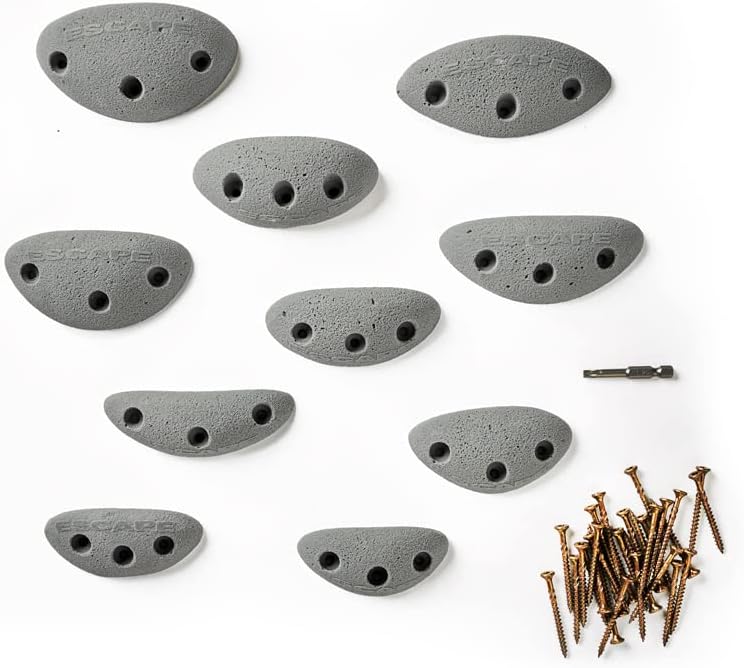
Best jugs / beginner-friendly set: Escape Climbing 10 Screw-On Jugs
Best jugs / beginner-friendly set
Escape Climbing 10 Screw-On Jugs
Escape Climbing
- Hold count: 10
- Hold types: Jugs (large, positive holds)
- Mounting hardware: Included — structural screws (screw-on, ~3 per hold)
- Texture: Textured premium plastic
- Material: Plastic
- Best for: Beginners and kids — big, easy, confidence-building grips
Ten large screw-on jugs from a dedicated climbing-hold brand — the friendliest holds for a first wall.
Last checked 2026-05-20
Best for a kids / family wall: Everett & Avery Co. Premium Rock Climbing Holds (Earth Tones)

Best for a kids / family wall
Everett & Avery Co. Premium Rock Climbing Holds (Earth Tones)
Everett & Avery Co.
- Hold count: —
- Hold types: Variety kids grips (earth-tone / boho)
- Mounting hardware: Included — T-nuts, set screws, Allen wrench
- Texture: Textured
- Material: Fibreglass / resin
- Best for: A kids or family wall, indoor or outdoor
A fibreglass/resin kids' set that mounts on T-nuts and comes with hardware and step-by-step install instructions.
Last checked 2026-05-20
Best crimps & training set: Nicros EH Training 45 Degree Crimps (10-Hold Set)

Best crimps & training set
Nicros EH Training 45 Degree Crimps (10-Hold Set)
Nicros
- Hold count: 10
- Hold types: Crimps (intermediate–advanced)
- Mounting hardware: Included — socket-head cap screw bolts
- Texture: Textured, commercial-gym grade
- Material: Polyurethane (PU)
- Best for: Finger-strength training — not for absolute beginners
A 10-piece polyurethane crimp set made in the USA with bolts included — genuine training holds rather than plastic playset grips.
Last checked 2026-05-20
Best bulk value set: Rocky Mountain Climbing Holds — 50 Large Holds (Screw-On)

Best bulk value set
Rocky Mountain Climbing Holds — 50 Large Holds (Screw-On)
Rocky Mountain Climbing Holds
- Hold count: 50
- Hold types: Large holds (variety)
- Mounting hardware: Screw-on — listing does not explicitly confirm screws are included
- Texture: Realistic rock-like texture
- Material: Resin
- Best for: Covering a large wall on a budget; popular with scouts, gyms and families
Fifty large screw-on holds, American-made with a lifetime guarantee — the cheapest-per-hold way to cover a big wall.
Last checked 2026-05-20
Who should buy what
First holds for a brand-new wall
Go heavy on jugs and footholds. A forgiving set lets you set problems you can climb from day one, which keeps the wall fun while you and the wall are both new. Buy the bolts at the same time so you can actually mount what you bought.
Adding variety to an existing wall
Fill the gaps. If your wall is all jugs, add slopers and pinches; if it is short on feet, add a foothold set. A small set of harder holds goes a long way toward making old problems feel new.
Kitting out a steeper training wall
A steeper wall asks more of your fingers, so be deliberate about how many small crimps you add and how often you climb on them. This is exactly the terrain where finger load adds up, so pair it with the safety timeline in the training silo.
The rest of the home-wall stack
Holds are one line on the build list. Two purchases pair directly with them. First, a landing — a low wall still drops you, so you need pads underneath. A folding bouldering crash pad is a flexible, common choice that doubles for outdoor climbing. Second, if your wall is for training, a portable hangboard mounts above the wall for warm-up hangs — read its safety caveat first, because finger-training timing is the one rule not to break. For the full build, frame to finish, start at the home-wall hub.
Frequently asked questions
How many climbing holds do I need for a home wall?
A small home wall starts to feel useful at around 30 to 50 holds, enough to set a few problems and vary them. A standard garage wall is often kitted with 80 to 150 holds across several sets. Buy in stages: start with a versatile set heavy on jugs, then add variety as you learn what your wall needs.
What hold shapes should a beginner home wall have?
Lean heavily on jugs (big, easy-to-grip holds) and add a smaller number of crimps, slopers and pinches for variety. Plenty of footholds matter too — small foot chips let you set problems that train footwork. A beginner-friendly set is mostly forgiving holds with a few harder shapes to grow into.
What are climbing holds made of?
Most modern holds are polyurethane (PU), which is lighter, tougher and less brittle than the older polyester resin. PU holds resist chipping and are the standard for home walls. Wooden holds are a separate category, kinder to the skin and popular on training boards, but most general hold sets are polyurethane.
How do climbing holds attach to a wall?
Bolt-on holds thread a socket-cap bolt through the hold into a t-nut, a threaded insert fitted into the back of the plywood panel. Screw-on holds, usually small footholds, attach with wood screws directly into the panel. Most holds ship without bolts, so buy the right bolt length and quantity, plus a hex key, separately.
Do climbing holds come with bolts?
Usually not. Most hold sets are sold as the holds alone, so you buy socket-cap bolts to match your t-nuts and wood screws for screw-on footholds separately. Check the bolt size your t-nuts use, commonly a standard climbing-hold size, and buy a few spare. A single hex key tightens them.
What does hold texture do, and is rougher better?
Texture is the grit moulded into the hold surface; it affects grip and how hard the hold is on your skin. Rougher texture grips well when new but wears your skin faster and smooths over time. Smoother holds are kinder to the skin but can feel slick. A mix across your wall is usually the most comfortable to train on.
How much should I budget for holds?
Holds are bought by the set, and a versatile starter set runs roughly $50 to $120, with larger or specialised sets costing more. A full beginner wall might use a few sets plus footholds and bolts. Holds are a meaningful share of a home-wall budget, so plan them alongside the frame, panels and landing.
Are wooden holds better than plastic for a home wall?
Different jobs. Wooden holds are gentler on the skin and common on training boards, which is why people use them for high-volume hangs. Polyurethane holds offer far more shape variety and texture, which is what a general home wall needs for setting varied problems. Most home walls are mostly plastic with wood added later if wanted.